Choosing among the top Artificial Grass Synthetic manufacturers worldwide requires more than comparing product photos or attractive prices. Quality appears in details that buyers can measure: yarn thickness, backing strength, drainage speed, UV resistance, and surface recovery after repeated foot traffic. A reliable manufacturer should explain these specifications clearly and provide consistent test data. Factory experience also matters. A supplier producing sports fields may use different systems from one serving residential gardens, playgrounds, or commercial rooftops.
Look closely at manufacturing evidence. Ask for production samples, batch records, laboratory reports, and references from completed installations. A useful sample should show the backing layers, stitch spacing, pile density, and drainage holes. Feel the grass after bending it repeatedly. Does it return upright, or remain flattened? Small differences can become expensive problems after rain, heat, pets, or heavy use. Independent certifications may support credibility, but their scope and validity should always be checked. Not every certificate proves overall product quality.
This guide examines leading manufacturers through practical and professional criteria, including material consistency, customization, installation support, environmental responsibility, and long-term customer service. Regional climate also changes the decision. A product suitable for a cool European garden may perform differently under intense tropical sunlight. Some supplier claims sound impressive.
They still need testing.
No ranking is permanently perfect. Manufacturing standards change, new materials appear, and customer experiences can vary between factories. The most dependable choice is not always the largest company. It is the manufacturer that communicates limitations honestly, documents performance carefully, and supports the product after delivery.
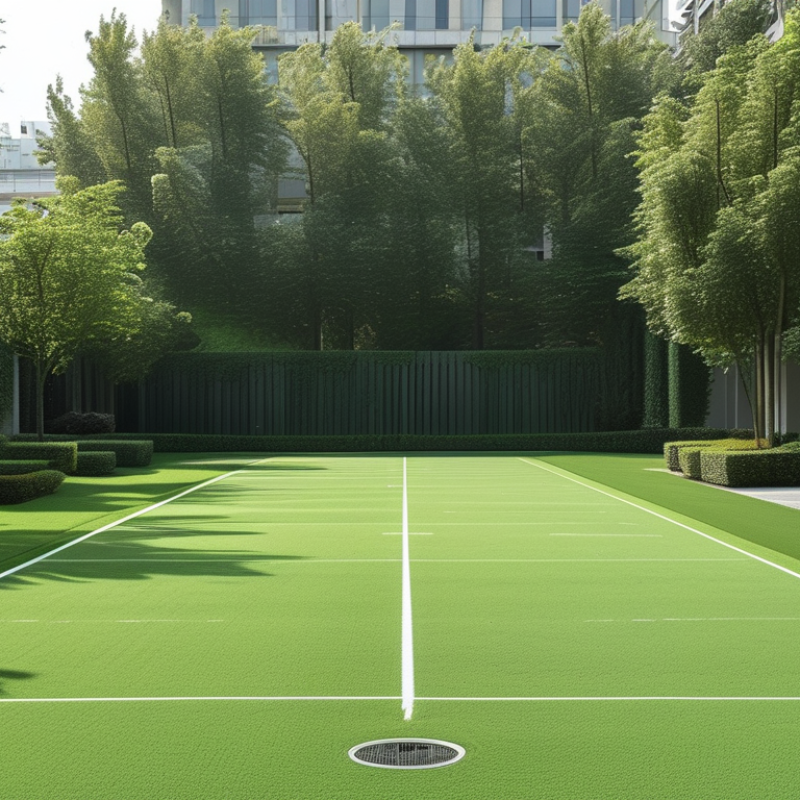
Artificial grass is a manufactured surface designed to imitate natural turf with synthetic fibers. Most products use polyethylene because it feels softer, while polypropylene can improve resilience and cost control. Polyamide is also used in specialized applications. According to Grand View Research, the global artificial turf market was valued at several billion U.S. dollars in 2023, with continued growth expected through the decade. That expansion reflects demand from sports fields, residential gardens, balconies, and commercial landscapes.
Manufacturing starts with polymer pellets, color pigments, and ultraviolet stabilizers. An extruder melts this mixture and forms thin filaments through a precision die. The filaments are stretched, cooled, and textured to create a more grass-like surface. Tufting machines then insert the yarn into a primary backing at controlled spacing. A secondary backing, often latex or polyurethane, locks the stitches in place. Drainage holes are added afterward. Small details matter. Uneven tension can create visible lines.
Quality testing may include tensile strength, tuft bind, abrasion resistance, color stability, water permeability, and accelerated UV exposure. ASTM and ISO test methods help laboratories compare performance, although results can differ between facilities. MarketsandMarkets has reported steady global growth for synthetic turf, supported partly by water-management concerns. Still, “low maintenance” is not maintenance-free. Dust, infill movement, heat retention, and worn fibers require inspection. Manufacturing is highly controlled, but no surface performs perfectly in every climate. That limitation deserves more honest attention.
Evaluating artificial grass manufacturers worldwide requires more than comparing catalog photos. Grand View Research reported strong global market growth through 2030, driven by landscaping, sports, and water-saving projects. That growth attracts capable factories and weaker imitators. Buyers should verify production history, export records, and documented quality controls before requesting large volumes.
Start with the product’s technical evidence. Ask for laboratory results covering UV resistance, color stability, tensile strength, drainage, abrasion, and tuft bind. EN 15330-1 supports testing for synthetic sports surfaces, while ASTM methods can help assess fiber and backing performance. A manufacturer should provide batch numbers and traceable reports, not only a glossy sample. Examine the backing closely. Pull several tufts by hand. Uneven stitching is a warning sign. No checklist is perfect.
The European Environment Agency has repeatedly identified water efficiency as an important climate adaptation issue, so lifecycle performance deserves attention. Compare yarn weight, backing construction, infill requirements, cleaning needs, and expected replacement intervals. Request an installation sample exposed to sunlight and rain for several weeks. This takes time. It can reveal distortion, drainage problems, or fading that brochures hide. Also review factory audits, worker safety documentation, warranty exclusions, production capacity, and realistic lead times. A low quotation may reflect thinner materials or uncertain testing, not better efficiency. My own caution is simple: even a highly professional supplier can underperform when specifications remain vague.
| Evaluation Dimension | Objective Data Point | What a Strong Manufacturer Should Provide | Recommended Verification Method | Suggested Review Weight | Importance |
|---|---|---|---|---|---|
| Product Application | Residential landscaping, commercial landscaping, sports fields, playgrounds, or multi-purpose use | A clearly defined product range with specifications matched to each application | Compare technical data sheets, installation instructions, and project-specific recommendations | 5% | High |
| Pile Height and Density | Pile height commonly varies by application; sports and landscaping products use different construction requirements | Published pile height, stitch rate, gauge, yarn weight, total product weight, and tolerance limits | Check factory data sheets and independently measure representative samples | 8% | High |
| Yarn Construction | Monofilament, fibrillated, or hybrid yarn; polymer type such as polyethylene or polypropylene | Complete yarn material information, cross-section description, denier or decitex, and UV-stabilization details | Review technical documentation and request laboratory confirmation where necessary | 8% | High |
| Backing System | Primary backing, secondary backing, coating type, and backing weight | Consistent backing construction with documented tensile strength, dimensional stability, and coating information | Review product specifications and test samples for delamination, tearing, and dimensional changes | 7% | High |
| Drainage Performance | Perforation pattern, drainage construction, and laboratory drainage rate | Drainage data reported with test method, test conditions, and product identification | Request a laboratory report and confirm that the drainage design suits the planned sub-base | 8% | High |
| UV and Weather Resistance | Resistance to ultraviolet exposure, heat, moisture, and repeated outdoor weathering | Product-specific accelerated-aging or weathering test results and a defined color-retention requirement | Verify the test standard, exposure duration, laboratory identity, and before-and-after performance results | 9% | High |
| Safety and Surface Performance | Impact attenuation, traction, shock absorption, ball rebound, or accessibility, depending on use | Application-specific test reports rather than generic claims about safety or performance | For sports surfaces, review relevant EN 15330-1 or FIFA Quality Programme testing where applicable; for playground systems, review applicable impact-attenuation testing such as ASTM F1292 | 10% | Very High |
| Fire Performance | Reaction-to-fire classification or other fire-test result required by the destination market | Product-specific fire documentation covering the complete installed system, including infill where relevant | Check whether the test standard and classification are accepted in the target country or project specification | 5% | Medium to High |
| Quality Management | Documented manufacturing controls, inspection procedures, traceability, and corrective-action process | Current ISO 9001 certification or an equivalent documented quality-management system | Verify certificate scope, validity, issuing body, factory address, and audit status | 8% | High |
| Environmental Management | Material composition, production impacts, waste control, and end-of-life planning | Transparent environmental data, responsible waste handling, and relevant ISO 14001 or life-cycle documentation where available | Review environmental certificates, product declarations, recycled-content claims, and supporting evidence | 7% | Medium to High |
| Chemical Compliance | Compliance with chemical restrictions in the destination market | Declarations and test evidence addressing applicable requirements such as EU REACH restrictions or local regulations | Check the declaration date, product scope, restricted-substance test method, and material coverage | 7% | High |
| Production Capacity | Available manufacturing lines, annual capacity, order quantity capability, and capacity allocation | Capacity information supported by production planning, lead-time commitments, and quality-control resources | Request production schedules, capacity statements, and references for projects of comparable size | 6% | Medium to High |
| Batch Consistency | Variation in color, pile height, weight, backing, and tufting between production lots | Defined inspection limits and retained samples for each production batch | Compare pre-production samples, approval samples, and shipment samples using documented acceptance criteria | 7% | High |
| Customization Capability | Available colors, pile heights, roll widths, backing options, yarn profiles, and packaging formats | Clear minimum order quantities, development charges, sample lead times, and tooling requirements | Request a written customization matrix and confirm that all changes are included in the final specification | 4% | Medium |
| Testing and Documentation | Completeness, recency, and traceability of technical reports and certificates | Reports showing product name or code, test date, standard used, laboratory details, and measured results | Confirm reports are current, product-specific, and issued by a competent or accredited laboratory where required | 7% | High |
| Warranty and After-Sales Support | Warranty duration, exclusions, claim process, installation requirements, and replacement policy | Written warranty terms linked to the product specification and supported by installation guidance | Review warranty conditions, maintenance obligations, geographic limitations, and response times | 5% | Medium to High |
| International Logistics | Export documentation, packaging, roll dimensions, shipping terms, and delivery lead time | Accurate packing lists, country-of-origin documents, stable export processes, and transparent Incoterms | Request a sample commercial shipment file and verify estimated shipping volume and delivery schedule | 4% | Medium |
| Total Cost of Ownership | Product price plus freight, infill, installation, maintenance, replacement, and disposal costs | A complete cost model rather than a comparison based only on price per square metre | Use identical specifications and installation assumptions when comparing quotations | 6% | High |
The synthetic grass industry is concentrated across Europe, North America, and Asia. European manufacturers often lead in landscape systems, sports surfaces, and environmental documentation. Their products usually emphasize realistic blade shapes, stable color, and recyclable components. Several North American producers focus on residential yards, playgrounds, and commercial landscaping. They often provide dense turf, flexible backing, and installation support. Asia remains a major production center, especially for polyethylene yarn, coated backing, and large-volume orders.
China supplies extensive manufacturing capacity, while producers in South Korea and other Asian markets serve specialized applications. Middle Eastern manufacturers are also expanding, driven by water conservation needs and harsh outdoor conditions. They commonly request strong ultraviolet resistance, heat tolerance, and efficient drainage. A reliable supplier should explain yarn thickness, stitch rate, backing layers, drainage speed, and laboratory testing. Product samples matter. So does factory inspection.
However, regional leadership does not guarantee consistent quality. Some companies present impressive specifications but provide limited aging data. This deserves caution. A cheaper roll may develop flattened fibers, visible seams, or backing shrinkage after intense sunlight. Experienced buyers compare warranty terms, batch consistency, fire ratings, and maintenance guidance. They also verify whether recycled materials affect strength or appearance. No region gets everything right. Installation quality remains an overlooked variable, even with premium turf. Independent testing and clear technical documents make supplier comparisons more dependable. Personally, I would trust measured performance over polished marketing claims.
Top Artificial Grass Synthetic Manufacturers Worldwide: Key Products, Technologies, and Quality Standards
Leading synthetic grass manufacturers usually produce systems for gardens, sports fields, playgrounds, balconies, and commercial landscapes. Residential turf often uses soft polyethylene fibers with varied blade shapes. Sports surfaces require stronger yarns, stable seams, and controlled ball response. Pet-friendly products may include perforated backing and faster drainage channels. Product selection should match climate, foot traffic, ultraviolet exposure, and maintenance capacity.
Modern manufacturing depends on precision tufting, layered backing, and UV-resistant polymer formulations. Some systems combine different fiber heights to create a more natural appearance. Textured yarns can improve resilience after repeated walking. Perforated backings support drainage, while shock pads may improve comfort on athletic fields. Infill materials influence stability, temperature, and surface behavior. Cooling technology helps, but no artificial grass stays cool under intense midday sun.
Quality should be verified through documented testing, not attractive samples alone. Buyers can request data for color retention, tensile strength, drainage rate, abrasion resistance, and fire performance. Independent laboratories may test products against relevant ISO, EN, ASTM, or sports-specific requirements. Manufacturing consistency matters too. Check batch records, seam strength, warranty terms, and installation guidance. A bright sample can mislead. Even high-quality turf is not maintenance-free, and some claims deserve closer review. Regular brushing, debris removal, and drainage inspections still affect service life.
Top Artificial Grass Synthetic Manufacturers Worldwide?
When comparing top artificial grass synthetic manufacturers worldwide, look beyond polished catalogs and low quotations. Real manufacturing experience appears in fiber consistency, backing quality, and production traceability. Ask how long the facility has produced landscape turf. Request batch records, UV test results, drainage data, and samples from different production runs. Samples can mislead. Experienced suppliers should explain pile height, yarn shape, density, and expected use. Technical answers matter more than confident sales language.
For a residential garden, prioritize soft touch, safe drainage, and stable color under strong sunlight. For sports or heavy foot traffic, inspect abrasion resistance, seam behavior, and recovery after compression. Ask whether the manufacturer can adjust backing, roll width, or drainage holes for your site. Clear drawings help. Reliable manufacturers provide installation guidance, maintenance instructions, and a written warranty with measurable terms. Check the warranty exclusions carefully. Some promises become vague when fading, flooding, or improper installation is discussed.
Independent laboratory reports and factory audits offer stronger evidence than website claims. Also confirm material composition and relevant market safety requirements before ordering. Communication is part of quality. Notice response speed, technical detail, and willingness to admit limitations. Ask for references from projects with similar climate, traffic, and drainage conditions. Photos help, but site visits reveal more. No manufacturer is perfect. A supplier that discusses possible failures may be more trustworthy than one offering effortless guarantees. Review the sample after sunlight exposure and repeated brushing. This step is easy to skip, and costly to ignore.
The chart presents practical, brand-neutral benchmarks commonly used when evaluating artificial grass manufacturers. Compare pile height, face weight, drainage capacity, stitch density, and UV warranty to assess product durability, appearance, installation performance, and long-term value.
: It uses synthetic fibers designed to imitate natural turf. Polyethylene feels softer, while polypropylene can improve resilience and cost control.
Polymer pellets, pigments, and ultraviolet stabilizers are melted together. Thin filaments are formed, stretched, cooled, and textured.
Tufting machines insert yarn into a primary backing. A secondary backing locks the stitches in place. Drainage holes follow.
Uneven yarn tension can create visible lines. Stitch spacing, backing strength, and drainage design also influence performance.
Common applications include gardens, balconies, sports fields, playgrounds, and commercial landscapes. The product should match traffic and climate.
Yes. It needs brushing, debris removal, and drainage inspections. “Low maintenance” does not mean maintenance-free.
Request yarn thickness, stitch rate, backing details, drainage speed, and laboratory data. Factory inspection and physical samples are useful.
Cooling features may reduce heat, but no surface stays cool under intense midday sun. This limitation deserves clearer attention.
Testing may examine tensile strength, tuft security, abrasion, color stability, water flow, and ultraviolet aging.
Manufacturing capacity does not guarantee consistent results. A cheaper roll may later show flattened fibers, visible seams, or backing shrinkage.
Artificial Grass Synthetic products are engineered ground coverings made from durable polymer fibers designed to resemble natural grass while reducing the need for watering, mowing, and regular maintenance. Their production typically involves selecting suitable polymers, extruding fibers, shaping them into grass-like strands, and securing those strands into a stable backing. Quality may be improved through UV protection, drainage layers, tufting techniques, and carefully designed fiber structures.
When evaluating manufacturers worldwide, buyers should consider production capacity, material consistency, technical expertise, testing procedures, and environmental practices. Leading regions often distinguish themselves through advanced manufacturing equipment, strong quality-control systems, and product innovation. Important factors include fiber resilience, color stability, drainage performance, safety testing, warranty support, and compliance with relevant industry standards. The right manufacturer should also provide products suited to the intended application, such as residential landscaping, sports fields, commercial spaces, or recreational areas. Comparing samples, certifications, customization options, delivery capability, and long-term service can help buyers make a practical and informed decision.

Deyuan Industry