China Top Artificial Grass Decoration Manufacturers?

Time:2026-10-07 Author:Ethan
0%

Choosing reliable suppliers requires more than attractive product photos. China’s artificial grass decoration industry serves hotels, retail spaces, exhibitions, offices, balconies, and residential projects. Manufacturers may offer artificial plant walls, moss panels, grass mats, decorative trees, and custom landscape features. Each product needs different evaluation criteria.

This guide examines China Top Artificial Grass Decoration Manufacturers through practical and verifiable standards. These standards include manufacturing experience, material quality, color consistency, backing strength, flame-retardant options, and production capacity. Product samples can reveal details that catalogs often hide. Check the grass blade density, edge finishing, odor, packaging, and resistance to crushing. A factory tour or video inspection may also clarify how orders are handled.

Look for suppliers with clear specifications and documented quality procedures. Reliable manufacturers should explain polyethylene or polypropylene materials, UV resistance, installation methods, and maintenance requirements. They should also provide realistic lead times, sample approval processes, and responsive after-sales communication. Certifications can support credibility, but certificates must match the actual product and current production site. Be careful with unusually low quotations.

Not every large factory suits every project. Some focus on sports turf, while others specialize in decorative interiors. This distinction matters. Custom colors, curved panels, logo integration, and small trial orders may require different capabilities. Buyers should compare several suppliers before committing. No manufacturer is perfect. Even experienced exporters can miss packaging details or underestimate seasonal delays. A careful review of samples, contracts, inspection records, and delivery terms can reduce these risks. This introduction provides a practical starting point for identifying capable Chinese partners and making a more informed purchasing decision.
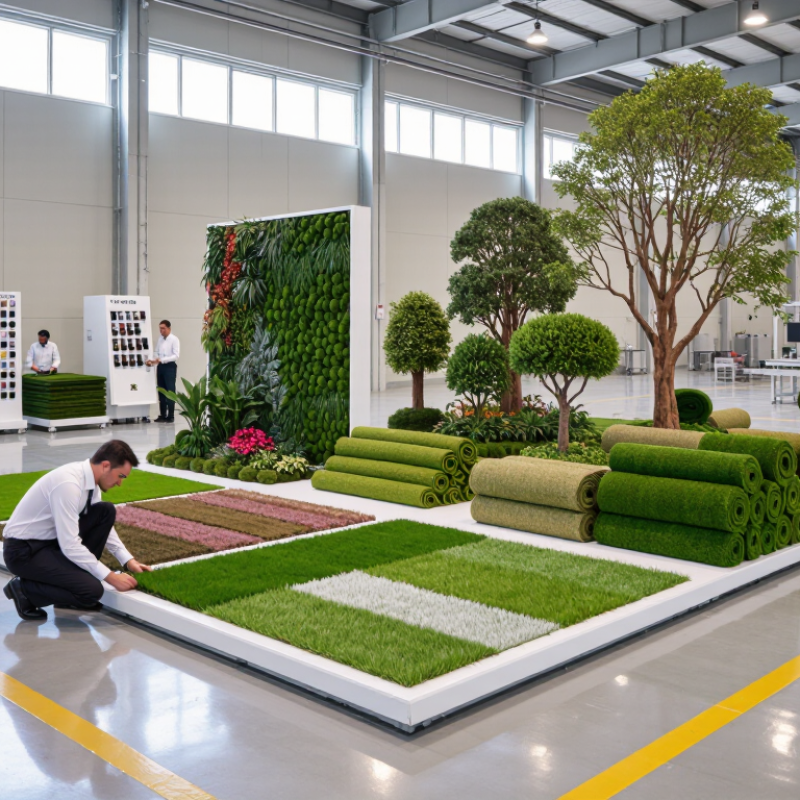
China Top Artificial Grass Decoration Manufacturers?

China’s Artificial Grass Decoration Manufacturing Landscape

China’s artificial grass decoration manufacturing landscape is broad, not uniform.
Factories serve balconies, retail displays, hospitality spaces, playground edges, and event interiors. Some focus on short, dense decorative turf. Others produce thicker landscaping products with stronger drainage layers. A top manufacturer should show more than attractive samples. It should explain yarn type, pile height, backing structure, color stability, and production capacity. Ask for batch records and test reports. Clear answers matter.

Practical sourcing begins with the application. A balcony needs manageable weight and reliable water flow. A hotel lobby needs soft texture and consistent shade under artificial light. Outdoor projects require UV resistance, seam planning, and stable backing. Manufacturers with experienced technicians can recommend specifications instead of simply offering a catalog. Factory visits help. Check cutting accuracy, adhesive control, roll storage, and worker safety. Small details reveal process discipline.

Quality can still vary between batches. That is an uncomfortable truth. A vivid sample may hide weak backing or uneven stitching. Independent testing reduces this risk, but paperwork is not enough. Compare samples from different production dates. Confirm packaging, inspection points, and after-sales communication in writing. Sustainable claims also need evidence, such as material declarations and recycling guidance. The strongest suppliers remain transparent when a requirement is difficult. That honesty is often more valuable than a perfect sales promise.

Key Product Categories and Decorative Applications

China’s leading artificial grass manufacturers usually divide products into landscape, sports, balcony, and event-use categories. Landscape turf often uses polyethylene blades with varied green tones and curled thatch. Typical pile heights range from 20 to 50 millimeters. Balcony products are lighter, softer, and easier to cut around drains. Sports systems require stricter testing for shock absorption, ball roll, seam strength, and drainage.

Grand View Research valued the global artificial turf market at about USD 4.9 billion in 2023. It also projects steady growth through 2030, supported by landscaping and sports construction. These figures help explain China’s broad supply base. Factories commonly offer backing options, UV stabilizers, fire-performance testing, and custom roll widths. However, a higher face weight does not automatically mean better decoration. Blade resilience, backing permeability, and color recovery matter more in a small courtyard.

Decorative applications are becoming more detailed. Rooftop gardens may combine 30-millimeter turf with stone paths and timber edging. Indoor displays often use shorter piles to reduce dust retention. Pet areas need stronger drainage and easier cleaning. In factory evaluations, I would request UV-aging results, stitch-rate records, sample seam tests, and batch color checks. Ask for installation guidance, too. Small omissions cause visible ripples. One practical weakness remains: some product sheets show laboratory performance but lack long-term site evidence. Buyers should compare test standards, climate exposure, and maintenance conditions before approving a decorative specification.

China Top Artificial Grass Decoration Manufacturers? - Key Product Categories and Decorative Applications

Product-category comparison for decorative, residential, commercial, and event applications

Product Category Typical Pile Height Common Construction Decorative Applications Typical Format Key Selection Factors
Decorative Lawn Grass 25–45 mm PE or PE/PP monofilament and texturized yarns Gardens, balconies, roof terraces, courtyards, and landscape borders Rolls, cut panels, and custom shapes Color blend, softness, drainage, UV resistance, and seam visibility
Short-Pile Carpet Grass 6–20 mm Dense, low-profile tufted backing Indoor displays, retail fixtures, exhibition booths, and wall panels Tiles, mats, rolls, and adhesive-backed sheets Easy cutting, low shedding, flat appearance, and cleaning convenience
Balcony and Patio Turf 20–35 mm Multi-tone yarn with perforated or porous backing Apartments, balconies, patios, children’s play corners, and pet areas Cut-to-size mats and modular tiles Weight, drainage holes, edge finishing, odor control, and maintenance
Vertical Green Wall Turf 20–50 mm Dense backing with mixed blade and thatch textures Feature walls, reception areas, photo backdrops, restaurants, and offices Panels, rolls, framed sections, and custom wall modules Visual density, panel alignment, fire-performance requirements, and installation method
Decorative Moss and Foliage Panels 20–80 mm texture depth Synthetic moss, leaves, grasses, and layered plastic foliage Hospitality interiors, wedding décor, retail walls, and themed installations Interlocking panels and custom-cut assemblies Color consistency, panel flexibility, dust resistance, and flame-retardant options
Event and Exhibition Turf 10–30 mm Lightweight tufted surface with portable backing Trade shows, product launches, temporary stages, and themed venues Portable rolls, carpet tiles, and reusable floor sections Weight, rollability, wrinkle recovery, fire rating, and temporary fixing
Putting and Recreational Turf 10–16 mm Short, dense monofilament with a stable backing system Home putting areas, leisure rooms, office recreation zones, and display gardens Practice mats, modular areas, and custom installations Surface speed, dimensional stability, ball roll, drainage, and edge support
Pet-Friendly Artificial Grass 20–35 mm Perforated backing with drainage-focused layered construction Pet balconies, kennels, daycare areas, patios, and indoor pet rooms Rolls, mats, trays, and fitted floor sections Drainage rate, cleanability, odor management, yarn resilience, and safe edge finishing
Colored and Custom-Pattern Turf 8–30 mm Single-color or multi-color synthetic yarn with custom tufting Brand-neutral event themes, children’s zones, sports décor, and artistic displays Rolls, logos, geometric panels, and cut-out shapes Colorfastness, pattern accuracy, cutting tolerance, installation time, and surface wear
Data note: Specifications shown are representative industry ranges for decorative artificial grass and related synthetic greenery products. Actual performance depends on yarn type, stitch rate, backing structure, installation conditions, climate, and applicable local safety requirements.

How to Evaluate Chinese Artificial Grass Manufacturers

Evaluating Chinese artificial grass manufacturers requires more than comparing online prices. Begin with product evidence, not showroom images. Request a physical sample with stated yarn height, density, backing type, and roll width. Test drainage after pouring measured water through a fixed area. Check whether fibers recover after repeated brushing and compression.

Small details matter.

Ask for UV-resistance data, colorfastness results, fire-performance documentation where relevant, and material declarations. Documents should identify testing laboratories, dates, sample codes, and applicable standards. Vague certificates deserve careful questions.

A factory visit can reveal useful facts. Observe yarn extrusion, coating, tufting, roll inspection, and storage conditions. Look for clean aisles, calibrated gauges, and records linking each batch to raw materials. Ask how rejected rolls are separated.

One weakness may be inconsistent backing thickness, even when the surface looks excellent.

Request production samples from different weeks, not one carefully selected roll. Compare weight, gauge, stitch rate, seam strength, and drainage performance. An independent pre-shipment inspection adds confidence, although it increases cost and may slow delivery.

Reliable communication is part of technical quality. Confirm tolerances, packaging, lead times, replacement rules, and payment milestones in writing. Ask for references from projects with similar climate, traffic, and installation methods.

A manufacturer that explains limitations may be safer than one promising perfect performance.

I would also test a small order before approving a large landscaping project. That step can expose odor, curling edges, color variation, or delayed replies. No evaluation is flawless; even careful buyers can overlook installation conditions. Keep test records, photographs, and signed specifications for every batch.

Manufacturing Standards, Materials, and Quality Control

China’s leading artificial grass decoration manufacturers should be judged by standards, not catalogue photos. Grand View Research’s 2024 market assessment forecasts a 6.8% annual growth rate for artificial grass through 2030. That growth increases pressure on factories to prove consistency. ISO 9001-based procedures should control purchasing, production, testing, and corrective actions.

Material selection directly affects appearance and service life. UV-stabilized polyethylene is common for soft, realistic blades. Polypropylene is often used for shorter thatch fibers. Backing systems may combine woven fabric, latex, and drainage perforations. A responsible factory verifies polymer grade, blade thickness, pile height, tuft spacing, and coating weight. Small variations can create visible color bands.

Quality control needs measurable evidence. EN 15330-1 supports testing for synthetic sports surfaces, while ISO 4892-3 guides accelerated UV exposure. ASTM-based tensile and dimensional tests can reveal weak backing or unstable seams. A practical inspection should compare production samples with approved limits, not personal opinions. It should also test drainage after installation. Poor drainage remains an overlooked defect.

No factory is flawless. Some suppliers still rely too heavily on visual inspection. That approach misses brittle fibers, uneven latex, and hidden packaging damage. Independent laboratory testing adds credibility, especially for large landscaping orders. Buyers should request batch records, UV-aging results, color measurements, and photographs taken during production. Claims without traceable records deserve caution.

How to read this chart: These are typical pile-height ranges used for common artificial grass applications, not brand-specific specifications. Manufacturing quality control commonly covers yarn composition, pile height, stitch rate, tuft bind, backing strength, UV/weathering resistance, color consistency, drainage, and dimensional stability. Polyethylene is widely used for soft landscape and sports yarns, while polypropylene and nylon are often selected for specific structural or appearance requirements.

Sourcing, Customization, and Export Considerations

China Top Artificial Grass Decoration Manufacturers?

Sourcing artificial grass from China requires more than comparing prices. Grand View Research estimates the global artificial turf market reached USD 4.47 billion in 2023, with a projected 6.6% CAGR through 2030. This growth increases supplier choices, but quality varies sharply. Request pile height, yarn shape, stitch rate, backing layers, roll dimensions, and weight. A 35 mm decorative grass sample may look dense, yet poor drainage can appear after heavy rain. Ask for batch photographs and production records.

Customization should match the installation scene. Balcony projects may need lightweight backing, while hotel landscapes require stronger UV resistance and stable color. Specify green shades, brown thatch, logo-free packaging, edge cutting, and carton labels before production. Independent testing should cover UV aging, tensile strength, drainage, fire behavior, and restricted substances. MarketsandMarkets identifies landscaping and residential applications as major demand areas, supporting continued interest in tailored products. Still, forecasts are not guarantees.

Export planning needs practical control. Confirm the HS classification with a customs professional, then align invoices, packing lists, certificates, and Incoterms. Request a pre-shipment inspection, roll-by-roll photos, and a retained reference sample. Container loading matters; compressed rolls can deform if packed carelessly. A lower unit price may hide higher installation waste. That lesson is easy to miss. Supplier audits, clear tolerances, and staged payments improve reliability, although no checklist removes every risk.

FAQS

What types of artificial grass are commonly used for decoration?

Common categories include landscape, balcony, rooftop, indoor display, pet area, and event-use turf. Landscape products often use 20–50 millimeter pile heights. Balcony turf is usually lighter and easier to cut around drains. Shorter piles may hold less dust indoors.

Does a heavier product always provide better decorative performance?

Not always. Face weight alone cannot prove quality. Blade resilience, color recovery, backing permeability, and drainage matter more in small spaces. A dense sample can still perform poorly after heavy rain.

What materials are commonly used in decorative artificial grass?

Polyethylene usually creates soft, realistic blades with varied green tones. Polypropylene is often used for shorter curled thatch fibers. Backing may combine woven fabric, latex, and drainage perforations. Material grades should be checked before production.

Which quality records should buyers request?

Request UV-aging results, pile-height records, stitch-rate data, and batch color checks. Ask for sample seam tests and production photographs. Independent laboratory reports can support large orders. Catalogue images are not enough.

How should artificial grass be customized for different spaces?

Match the product to the installation scene. Balconies may need lightweight backing and precise drain cuts. Rooftops can combine 30-millimeter turf with stone paths and timber edging. Pet areas need stronger drainage and easier cleaning.

What problems can occur during installation?

Poor planning can create visible ripples, open seams, or blocked drainage. Compressed rolls may deform during careless container loading. Uneven bases can make a good product look disappointing. Installation guidance should be requested early.

How can buyers compare suppliers fairly?

Compare approved samples, measurable tolerances, testing methods, and batch records. Check polymer grade, blade thickness, pile height, stitch spacing, and backing layers. Do not compare prices alone. Lower prices may create more installation waste.

What should be checked before export and delivery?

Confirm product classification with a qualified customs professional. Align invoices, packing lists, certificates, and delivery terms. Request pre-shipment inspection, roll-by-roll photographs, and a retained reference sample. No checklist removes every risk.

Conclusion

China’s artificial grass decoration manufacturing landscape combines large-scale production capabilities with flexible customization for residential, commercial, hospitality, event, and landscape projects. Artificial Grass Decoration products may include decorative turf rolls, wall panels, balcony greenery, themed displays, potted arrangements, and custom-cut pieces. Buyers should evaluate manufacturers by product consistency, technical experience, communication efficiency, production capacity, sample quality, and ability to meet project-specific design requirements.

Important considerations include fiber type, pile height, color blending, backing materials, UV resistance, drainage performance, flame-related requirements where applicable, and overall durability. Reliable manufacturers should maintain clear quality-control procedures covering raw materials, tufting, coating, cutting, packaging, and final inspection. For sourcing and export, purchasers should confirm minimum order quantities, customization options, sample approval processes, lead times, packaging standards, shipping terms, and required documentation. A well-defined specification and inspection plan can help ensure that the selected Artificial Grass Decoration solution matches the intended appearance, performance, budget, and installation environment.


Ethan

Ethan

Ethan is a seasoned marketing professional with a deep expertise in our company's innovative product line. With a passion for sharing knowledge and insights, he takes the lead in regularly updating our corporate blog, where he explores industry trends, product features, and effective marketing......