Choosing artificial grass is no longer a simple decision about color or softness. Global buyers now compare fiber shape, backing strength, drainage design, infill, UV resistance, and installation demands. This guide, “Top 10 Artificial Grass Synthetic Types for Global Buyers,” examines those differences through practical purchasing criteria.
Rick Doyle, a former president and CEO of the Synthetic Turf Council, has observed, “The right synthetic turf is selected for the application, not the sales photograph.” That principle matters when comparing landscape lawns, sports fields, rooftop gardens, playgrounds, and commercial displays. A dense polyethylene lawn may feel comfortable under bare feet. A shorter, resilient product may perform better beneath constant foot traffic. Appearance can mislead.
Performance depends on context.
Regional weather also changes the decision. Intense sunlight can expose weak yarns. Heavy rain can reveal poor drainage layers. Coastal air may challenge metal components and adhesives. Buyers should request laboratory data, installation guidance, warranty terms, and independent testing where available. Certifications are useful, but they do not replace site inspection or supplier accountability.
No ranking stays perfect for every project. A premium product can fail when installed over an unsuitable base. A budget option may perform adequately in a lightly used garden. That uncomfortable detail deserves attention. This introduction therefore treats Artificial Grass Synthetic products as engineered systems, not decorative carpets. The following ten types are compared by real use, expected climate, maintenance needs, safety considerations, and long-term value.
Top 10 Artificial Grass Synthetic Types for Global Buyers
Artificial grass is a manufactured surface designed to imitate natural turf. Its structure usually includes synthetic yarn, primary backing, secondary coating, and optional infill. The yarn creates the visible blades, while the backing holds tufted fibers in place. A latex or polyurethane coating improves dimensional stability. Infill adds weight, drainage, and blade recovery.
The ten common synthetic options are polyethylene, polypropylene, nylon, polyethylene-polypropylene blends, monofilament yarn, fibrillated yarn, textured yarn, thatch fibers, non-infill systems, and infill-ready systems. Polyethylene feels softer and suits residential lawns. Polypropylene costs less, but it can flatten sooner under heavy traffic. Nylon offers strong recovery and heat resistance, although it often feels firmer. Blended yarns balance appearance and durability. Details matter.
A 2024 Grand View Research assessment identified landscaping as a major artificial grass application and projected steady market growth through 2030. The Freedonia Group also reports continuing demand for synthetic turf in recreational and commercial settings, driven by water-saving requirements and lower routine maintenance. These figures support market confidence, but they do not replace site testing. A sunny rooftop, a shaded garden, and a football training area need different specifications. Pile height, stitch rate, drainage speed, UV stability, and surface temperature should be checked together. “Premium” is not a technical measurement. Buyer comparisons remain imperfect.
Artificial grass is made from synthetic blades tufted into a primary backing and secured with a secondary backing. The chart compares ten widely used fiber and construction types by representative pile height. Actual specifications vary according to landscaping, sports, residential, and decorative applications.
The backing controls stability and drainage. A single backing layer may suit temporary displays, while dual-layer backing offers better dimensional strength. Latex-backed products are common, but polyurethane backing can provide strong moisture resistance.
Buyers should check drainage holes, coating quality, and roll dimensions carefully. Small differences can affect installation waste. Pile height changes appearance and maintenance. Short piles around 20–30 millimeters look neat and dry quickly. Medium piles around 30–40 millimeters create a balanced lawn effect. Taller piles feel more luxurious, but they can flatten under furniture. Higher is not automatically better.
Tips: Request fiber samples, backing details, UV test data, and drainage specifications before ordering. Compare the product with your climate and expected use. In hot regions, dark surfaces may become uncomfortable under direct sunlight. In rainy regions, poor drainage creates problems quickly. I have seen attractive samples fail because the backing was overlooked. That mistake is easy to make, and worth reconsidering. Ask for installation guidance, seam requirements, and realistic service expectations from qualified suppliers.
Top 10 Artificial Grass Synthetic Types for Global Buyers
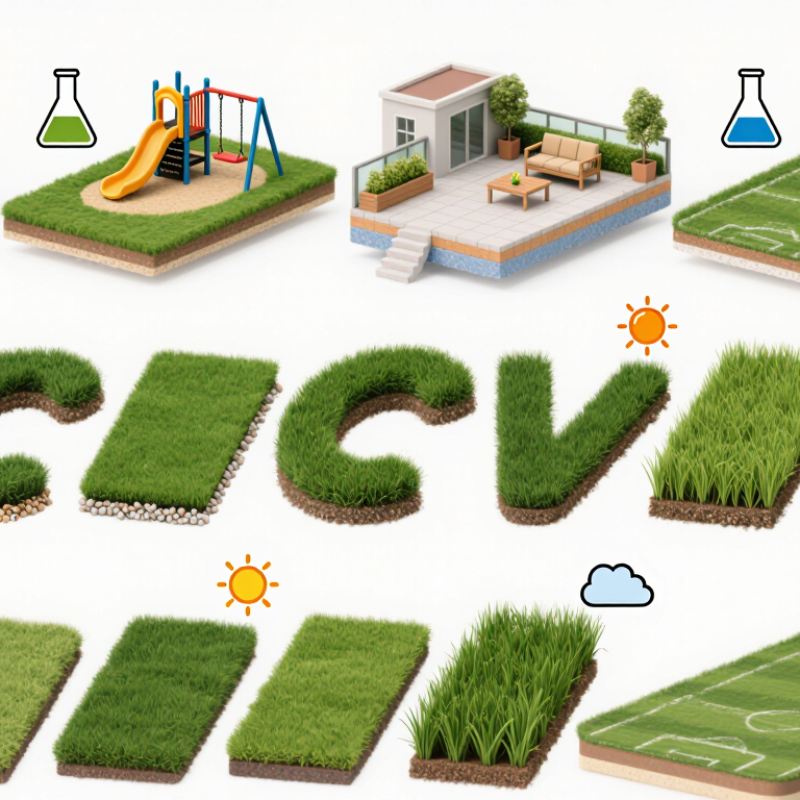
Artificial grass now serves gardens, sports fields, playgrounds, and busy commercial areas. Each setting needs a different fiber shape, backing system, and drainage design. From installation experience, landscape grass with medium-height blades suits home gardens and courtyards. Softer polyethylene fibers create a natural touch around paths, patios, and balconies. Pet-friendly varieties use permeable backing, helping urine and rainwater pass into the sub-base. They also need regular rinsing. Small details matter.
Sports surfaces require stronger construction. Short, dense turf supports football, hockey, and training areas, while specialized putting grass provides a smoother, faster roll. Multi-sport systems balance shock absorption, traction, and ball response. Playground turf usually includes a cushioning layer beneath the grass, reducing impact around climbing equipment. It must be installed over a correctly prepared foundation. The grass alone cannot provide enough protection.
Commercial and rooftop projects often use durable landscape turf with UV-resistant fibers. Retail entrances, offices, hotels, and event spaces benefit from low-maintenance surfaces that remain neat under heavy foot traffic. Decorative indoor turf can create visual displays, but it may need extra fire-safety review. Budget turf sometimes looks convincing at first, yet weak backing can curl at the edges. I have seen this overlooked. Buyers should check pile height, density, drainage rate, warranty terms, and local climate performance before ordering. A sample tested under real light is wiser than a catalog photograph.
| No. | Synthetic Grass Type | Primary Fiber Material | Typical Pile Height | Typical Application | Recommended Infill | Drainage and Backing Features | Main Performance Advantages | Key Buyer Considerations | Typical Service Life* |
|---|---|---|---|---|---|---|---|---|---|
| 1 | Landscape Monofilament Turf | UV-stabilized polyethylene (PE) monofilament yarn | 30–45 mm | GardensResidential lawnsRooftops | Silica sand; optional cooling or performance infill | Latex or polyurethane-coated primary backing with perforated drainage holes | Natural appearance, soft touch, good resilience, and low routine maintenance | Check color blending, yarn memory, UV testing, seam quality, and local drainage requirements | 8–15 years, depending on traffic, climate, and maintenance |
| 2 | Landscape Slit-Film Turf | UV-stabilized PE slit-film tape yarn | 25–40 mm | Large lawnsPublic landscapingBudget projects | Silica sand or sand-based infill | Woven or non-woven backing with drainage perforations | Cost-efficient coverage, stable surface, and practical performance for moderate foot traffic | May look less natural than monofilament; inspect tape width, fibrillation, and resistance to splitting | 6–12 years, depending on usage and exposure |
| 3 | Polypropylene Decorative Turf | Polypropylene (PP) yarn | 15–30 mm | BalconiesIndoor displaysLow-traffic areas | Usually light silica sand or no infill | Lightweight backing; drainage depends on perforation design | Light weight, economical installation, and suitable for decorative applications | Lower abrasion and heat resistance than many PE or nylon products; avoid heavy traffic use | 4–8 years in suitable low-traffic conditions |
| 4 | Nylon High-Resilience Turf | Nylon/polyamide yarn, commonly used in performance-focused constructions | 20–35 mm | High-traffic landscapesCommercial entrancesPractice areas | Silica sand; engineered infill where specified | Dense backing with perforated drainage; may require a prepared aggregate base | High tensile strength, strong recovery after compression, and excellent wear resistance | Generally higher cost and a firmer feel; verify heat behavior and surface temperature expectations | 10–15 years, depending on traffic and maintenance |
| 5 | Hybrid PE Landscape Turf | Combination of PE monofilament and PE textured or fibrillated yarn | 35–50 mm | Premium gardensHotelsCommercial landscapes | Silica sand with suitable performance infill | Multi-layer backing with drainage perforations; installation normally requires a compacted base | Improved visual density, balanced softness, good blade recovery, and enhanced dimensional stability | Requires careful brushing and infill distribution; compare stitch rate, face weight, and backing strength | 10–15 years under normal landscape use |
| 6 | Football and Soccer Sports Turf | PE monofilament or textured PE yarn designed for sports use | 40–60 mm | FootballSoccerTraining fields | Sand plus rubber or organic performance infill, according to the system design | Permeable backing installed over an engineered shock-absorbing and drainage base | Traction, ball interaction, dimensional stability, and recovery under repeated play | System testing, shock-pad compatibility, seam strength, infill management, and sport-specific regulations are essential | 8–12 years or more, subject to usage intensity and maintenance |
| 7 | Multi-Sport Synthetic Turf | PE or nylon yarn selected for multi-use athletic surfaces | 15–35 mm | TennisHockeySchoolsMulti-use courts | Silica sand, engineered infill, or a sand-free system depending on sport | Permeable backing with a level, engineered base; shock pad may be included | Versatile use, controlled ball roll, consistent traction, and durable wear performance | One surface may not optimize every sport; verify pile height, pace, friction, and applicable standards | 7–12 years, depending on sport mix and maintenance |
| 8 | Putting Green Turf | Short, dense nylon or PE yarn | 10–18 mm | Golf practiceBackyardsHospitality areas | Fine silica sand or specialized stabilizing infill | Dense backing with precision drainage; installation requires a very smooth, accurately graded base | Consistent ball roll, low pile, clean edging, and minimal mowing or watering requirements | Base flatness, seam visibility, pile direction, and roll-speed consistency require close quality control | 8–12 years with proper cleaning and brushing |
| 9 | Playground Safety Turf System | Soft PE or polypropylene surface yarn combined with a tested shock pad or impact layer | 25–45 mm | PlaygroundsDaycare facilitiesRecreation areas | Rounded silica sand or an infill system approved for the complete safety assembly | Permeable backing installed over a certified impact-attenuating system and drainage base | Soft surface feel, accessible maintenance, year-round appearance, and integrated fall protection potential | Safety performance depends on the complete system; verify critical fall height, accessibility, edge details, and inspection requirements | 8–12 years for the turf layer; safety components require scheduled inspection |
| 10 | Pet-Friendly Drainage Turf | UV-stabilized PE or PE/PP blend with resilient yarn | 25–40 mm | Pet areasKennelsDog parksBalconies | Silica sand or antimicrobial and odor-control infill designed for pet applications | High-flow perforated backing over a free-draining aggregate base; sealed seams are recommended | Fast drainage, easier waste removal, good odor-control potential, and resistance to routine pet traffic | Requires regular rinsing, waste removal, odor management, and suitable sub-base design | 7–12 years, depending on pet density, cleaning, and climate |
*Typical service-life ranges are general industry planning estimates rather than guarantees. Actual performance varies with climate, UV exposure, installation quality, traffic volume, infill selection, cleaning, brushing, and compliance with the manufacturer’s maintenance instructions.
Global buyers can choose from landscape polyethylene, polypropylene, nylon, pet turf, playground turf, sports turf, putting green turf, rooftop turf, balcony turf, and commercial high-traffic turf. Each type performs differently under local weather and daily use. Durability depends on fiber shape, pile height, backing strength, UV resistance, and traffic levels. A dense nylon surface handles repeated movement well, while softer polyethylene often feels more natural under bare feet. The tallest pile is not always the best choice. Long fibers can flatten and trap debris.
Drainage deserves careful inspection. Look for perforated backing, stable seam construction, and tested drainage rates. Heavy rain should pass through quickly, without creating puddles beneath the surface. Safety also includes low heat buildup, secure installation, non-toxic materials, and suitable shock absorption for play areas. A playground surface needs different protection than a decorative balcony.
Appearance changes with fiber color, blade shape, and infill distribution. Multi-tone fibers usually look more convincing than one bright green shade. Maintenance remains simple, but not effortless. Remove leaves, rinse dust, brush flattened zones, and clean pet waste promptly. I have seen attractive installations fail because drainage layers were too thin. Buyers should request test data, installation guidance, warranty terms, and climate-specific advice. Local conditions matter more than a product photograph.
Global buyers should compare artificial grass by use, climate, and maintenance needs. Common options include polyethylene, polypropylene, nylon, hybrid fibers, landscape turf, sports turf, pet turf, balcony turf, playground turf, and premium multi-shape systems. Each type behaves differently under sunlight, heavy traffic, rain, and temperature changes. No single type wins everywhere.
Check pile height, stitch rate, fiber thickness, backing strength, drainage speed, and UV resistance. A 30–40 mm landscape pile may feel soft, while shorter sports turf usually supports faster movement.
In hot regions, dark fibers can become uncomfortable under direct sunlight. In wet climates, poor drainage may create odors and surface movement. Request physical samples, technical data, and independent test results before ordering.
A glossy sample can look impressive but may hide weak backing. That mistake is common.
Tips:
Compare samples outdoors for several days. Pour water over them. Bend the backing by hand. Check whether fibers recover after repeated pressure. Ask about installation requirements, infill compatibility, fire performance, and expected service conditions in your market. Local installers can reveal problems that product sheets overlook. Still, their advice may reflect familiar products rather than the best solution. Review it carefully. Select the type that balances appearance, safety, durability, climate suitability, and total lifecycle cost.
Polyethylene feels soft and suits gardens, balconies, and family areas. Polypropylene costs less and fits light decorative use. Nylon resists heavy traffic but feels firmer and costs more.
Curved, C-shaped, and V-shaped fibers can recover better after walking. This helps busy areas look tidier. Shape matters.
Backing affects stability, drainage, and dimensional strength. Single backing suits temporary displays. Dual-layer backing usually offers stronger support.
Check drainage holes, coating quality, moisture resistance, and roll dimensions. Polyurethane can resist moisture well. Small differences may increase installation waste.
Short piles around 20–30 millimeters look neat and dry quickly. Medium piles around 30–40 millimeters create a balanced lawn appearance. Tall piles feel luxurious but may flatten under furniture.
No. Higher is not automatically better. Tall fibers can flatten, while short fibers may suit active or rainy areas better.
Hot regions may make dark surfaces uncomfortable under direct sunlight. Wet climates require fast drainage. Poor drainage can create odors and surface movement.
Request fiber samples, backing details, UV data, drainage specifications, and independent test results. Compare samples outdoors for several days. Pour water over them and bend the backing by hand.
Ask about seam requirements, drainage preparation, infill compatibility, and installation guidance. Local installers may reveal practical problems. Their advice may still favor familiar products, so review it carefully.
Match the grass to expected traffic, climate, appearance, maintenance, and total lifecycle cost. No single type wins everywhere. I once trusted attractive samples too much. The backing deserved more attention.
Artificial Grass Synthetic products are engineered surfaces made from durable polymer fibers, a supportive backing, and drainage layers that create a consistent green appearance with reduced watering and routine care. Their performance varies according to fiber shape, softness, color blend, backing structure, infill options, and pile height. Shorter piles may suit putting areas and compact commercial spaces, while medium or longer piles can provide a fuller appearance for gardens, playgrounds, and recreational fields.
The best synthetic grass type depends on its intended environment and expected use. Global buyers should compare durability, drainage efficiency, UV resistance, safety, appearance, comfort, installation requirements, and maintenance needs. High-traffic sports areas require resilient fibers and stable backing, whereas gardens may prioritize natural looks and softness. Playgrounds should emphasize cushioning and reliable drainage, while commercial locations often need an attractive, low-maintenance surface. By matching product structure and performance with climate, usage intensity, local installation conditions, and long-term costs, buyers can select a practical and dependable artificial grass solution.

Deyuan Industry