Artificial grass can bring a soft green accent to places where natural lawns struggle, from shaded patios to compact apartment balconies. With thoughtful placement, it can frame a seating area, brighten a plain wall, or add a playful surface beneath a children’s craft table. A narrow balcony might need only a fitted runner, a planter, and two weather-resistant chairs. Indoors, a small grass-covered panel can create a fresh backdrop for photographs or a display shelf. The effect can feel inviting. It can also look artificial if the color is too bright or the edges are left exposed.
This guide explores practical ways to use Artificial Grass Decoration without making a space feel crowded or difficult to maintain. It considers surface preparation, measuring and cutting, color and texture choices, and how to pair grass with wood, stone, or potted plants. Before buying, check the product’s intended use, drainage design, and care instructions. Outdoor installations may need secure edging and a base that allows water to drain. For balconies or shared spaces, confirm that the surface can be installed safely and will not block drains or create a trip hazard. Small details matter. A sample viewed in daylight can reveal a color mismatch that a screen hides. Artificial grass is not a substitute for every natural planting, and it may need regular brushing to keep its fibers upright. Still, a restrained design can add texture and a clear focal point. The best result is useful, comfortable, and honest about its upkeep.
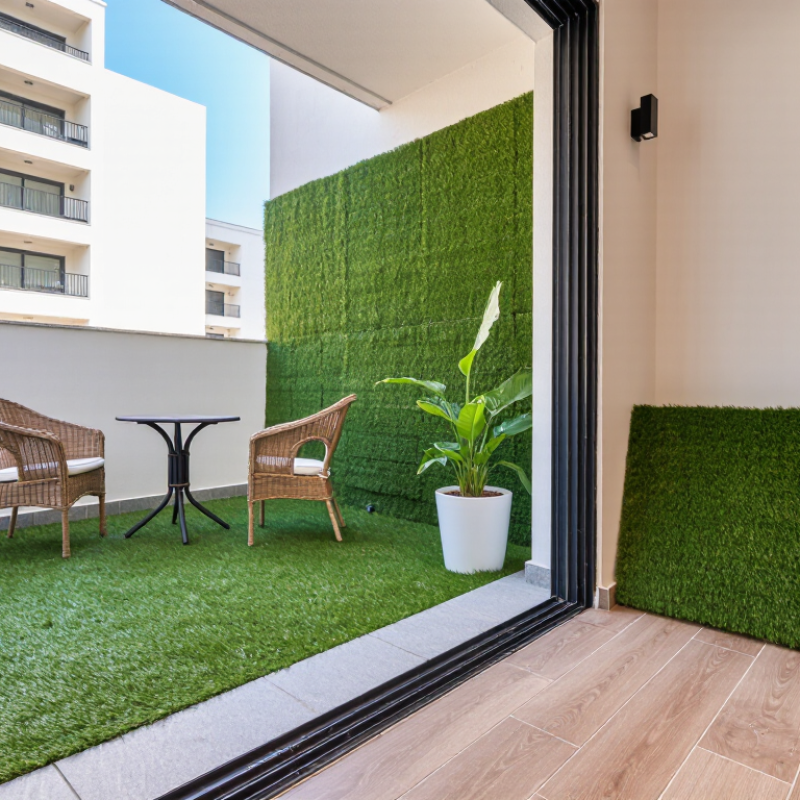
Choosing Artificial Grass for Your Space and Decorating Goals
Choose artificial grass for the way you will use the space, not just its color. A small balcony may need a compact pile that lets chairs sit steadily. For a play area, a softer, denser surface can feel more comfortable underfoot. Measure the area and check the product’s drainage details before buying. Water should have a clear route away from the surface.
Color and texture change how a space feels. Olive or mixed green tones often look more natural than one flat shade. If possible, compare samples outdoors at different times of day. Test it outside. Sunlight can make a sample look brighter than it did indoors. I once underestimated how much a dark green surface would stand out beside pale paving. It was not a disaster, but I would sample first now.
Think about edges and nearby materials. A narrow strip beside a garden path can define the route without covering the whole yard. On a balcony, a rug-like area can soften concrete and frame a small table. Leave access to drains and avoid trapping water beneath heavy planters. For indoor decorating, use a suitable underlay and secure the edges to reduce slipping. Check the backing and care instructions, too; products vary, and not every surface suits every setting.
How to Decorate with Artificial Grass?
Typical pile-height ranges by space and decorating goal
Shorter pile suits a smooth putting surface, while taller pile can create a softer, fuller look for decorative and play spaces. These are general ranges; actual products vary.
Planning the Layout and Preparing the Surface
Before unrolling artificial grass, measure the area at several points; garden edges are rarely as straight as they look. Sketch fixed features such as steps, planters, and drains, then mark where seams will fall. Keep joins away from the main viewing angle when possible. Grass fibres usually lean in one direction, so align every piece consistently for a more natural appearance. Allow a little extra material for trimming. Small spaces still need a plan. A common oversight is placing a seam beneath a chair leg, where it may catch or show.
Surface preparation depends on the location. For soil, remove roots, stones, and loose debris, then create a firm, even base with a slight fall toward a suitable drainage area. Compact the base in layers; soft patches can leave dips after rain. A permeable weed barrier may help, but it cannot correct poor drainage. On concrete or a balcony, sweep away grit and check that water can escape before laying the grass. Let wet surfaces dry. I would also test the layout with the material loosely placed before cutting; measuring twice is less satisfying than a quick cut, but usually saves waste. If water pools during a hose test, adjust the surface before installation.
Installing Artificial Grass for a Clean, Natural Look
A convincing artificial lawn begins below the visible surface. Remove roots and loose soil, then shape the base so water can drain away from buildings. A slight slope, commonly around 1–2%, helps prevent puddles; compacted aggregate creates a steadier foundation. Follow the turf system’s installation guidance, since base depth and drainage needs vary by soil and climate.
Small details matter. Keep seams straight, trim edges carefully, and brush the pile in different directions for a less uniform finish. A little variation looks more natural than a perfectly flat, plastic-looking surface.
Heat deserves attention, too. Penn State’s Center for Sports Surface Research reported that synthetic turf can reach about 200°F in strong sun, while natural grass may remain near 80–90°F under similar conditions. Those figures depend on weather and surface design, but they are a practical reminder: consider shade, use patterns, and summer temperatures before choosing a location.
Rinse dust and debris away, and brush flattened areas periodically; heavy foot traffic can leave visible tracks. The honest drawback is that artificial grass will not feel or cool the same as living grass. That trade-off is easy to underestimate. It may also need occasional seam checks after weather shifts or ground movement.
Adding Furniture, Plants, and Decorative Accents
How to Decorate with Artificial Grass?
Adding Furniture, Plants, and Decorative Accents
Treat artificial grass as a backdrop, not a finished room. Place a compact dining set on a firm, level area, and use broad furniture feet to spread weight. A low bench beside the edge can make a small patio feel more settled. Add potted herbs, ornamental grasses, or a leafy shrub for height and changing texture. The U.S. Environmental Protection Agency reports that landscape irrigation accounts for nearly one-third of residential water use nationally. Container plants still need watering, so choose pots with drainage holes and group them near a hose or watering can.
Tips: Leave walking space around chairs. Use outdoor cushions in one or two colors. Set a tray on a side table for drinks, and secure lightweight décor on windy days. Keep it simple.
A ceramic pot, warm lantern, and woven outdoor rug can soften the uniform green surface. Check that rugs allow drainage and are suitable for outdoor use; trapped moisture can cause odors or discoloration. Avoid dragging heavy furniture, which may flatten the grass fibers. A tightly coordinated set can look staged. That may suit some spaces, but a little mismatch often feels more lived-in. Test the arrangement before buying several pieces, since the grass color and sunlight can make familiar colors look different.
How to Decorate with Artificial Grass? - Adding Furniture, Plants, and Decorative Accents
| Decor Element |
Suitable Choices |
Placement and Styling |
Practical Considerations |
| Outdoor Furniture |
Weather-resistant chairs, a compact sofa, a coffee table, or a dining set |
Arrange seating around a clear focal point, such as a table or fire pit. Leave a comfortable route through the space. |
Use broad feet or furniture pads to spread weight and help prevent marks in the grass. Check the turf care instructions before placing heavy items. |
| Planters and Living Plants |
Container-grown herbs, flowering plants, ornamental grasses, or small shrubs |
Group planters in odd-numbered clusters or place taller plants along the perimeter to add height and soften edges. |
Choose pots with drainage holes and use saucers or risers where appropriate. Move containers periodically so the turf underneath can be cleaned and inspected. |
| Outdoor Rug |
A breathable, outdoor-rated rug in a simple pattern or natural color |
Define a seating or dining zone by placing the rug beneath the main furniture grouping. |
Check that the rug is suitable for use outdoors and lift it regularly to allow the artificial grass to dry and air out. |
| Lighting |
Solar path lights, outdoor string lights, or low-voltage garden lights |
Use soft lighting around seating areas, along paths, or near planters to create depth after dark. |
Keep cables secured and use lighting designed for outdoor conditions. Avoid placing hot fixtures directly against the turf. |
| Decorative Accents |
Weather-resistant cushions, lanterns, ceramic ornaments, or a small water feature |
Repeat a small number of colors or materials to create a coordinated look without making the space feel crowded. |
Secure lightweight items in windy areas. Check that ornaments have smooth bases to reduce the chance of snagging turf fibers. |
| Pathways and Edging |
Stepping stones, pavers, gravel borders, or low garden edging |
Use a pathway to connect the entrance to seating or garden features, and use edging to create a neat transition between surfaces. |
Keep paths level and stable. Ensure water can drain appropriately around the lawn and any adjoining hard surfaces. |
Maintaining and Updating Your Artificial Grass Decor
Artificial grass can stay inviting when its surface and surrounding decor receive regular attention. Sweep away dry leaves with a soft broom, moving against the pile to lift flattened blades. For dust or spills, rinse with water and use mild soap if needed. Check care instructions for your specific turf before trying cleaners. Small changes help.
I’ve found that outdoor furniture can leave visible pressure marks, especially after a rainy week. Move chairs now and then, then gently brush the fibers upright. Clear debris from drainage areas so water can pass through freely. For pet waste, remove solids promptly and rinse the spot well. Avoid sharp tools that could cut the backing.
Updating the look does not require replacing the grass. Rotate planters, add weather-resistant cushions, or use a narrow outdoor rug to define a seating area. Choose pots with drainage holes, and place them on small stands when practical; constant moisture can leave the turf damp. A pale cushion may brighten a shaded corner, though it can show dirt faster than expected. Not every idea works. I once crowded a small patio with too many pots, making routine sweeping awkward. Leave clear paths for cleaning, and inspect edges or seams occasionally for lifting or wear. If damage appears, follow the installer’s repair guidance rather than pulling at the turf.
FAQS
Measure the area at several points and sketch steps, planters, and drains. Keep seams away from main viewing angles when possible. Leave extra material for trimming. Small spaces need plans.
Remove roots, stones, and loose debris. Build a firm, even base with a slight slope toward drainage. Compact it in layers. Soft patches may sink after rain.
Yes, if water can escape. Sweep away grit, check drainage, and let wet surfaces dry. Try the grass loosely in place before cutting.
Add a compact dining set on level ground, with broad furniture feet. Leave walking space around chairs. A low bench can make the edge feel settled.
Try potted herbs, a leafy shrub, or ornamental grasses for height. Use pots with drainage holes. A warm lantern or outdoor rug can soften the green.
Sweep leaves with a soft broom against the pile. Rinse dust or spills with water; use mild soap if needed. Check care instructions before using cleaners.
Move chairs occasionally and brush flattened fibers upright. Remove pet solids promptly, then rinse the spot well. Clear debris from drains. Avoid sharp tools.
Rotate planters, change cushions, or add a narrow outdoor rug. Keep paths clear for sweeping. I once crowded a small patio with pots; cleaning became awkward.
Conclusion
Artificial Grass Decoration can transform a patio, balcony, or garden into a comfortable, inviting space with a fresh green appearance. Start by considering how the area will be used, the look you want, and the type of artificial grass that suits the space. Measure carefully, plan the layout, and prepare a clean, even surface so the grass can sit smoothly and look natural.
After installation, arrange furniture to create practical areas for relaxing or gathering, and add potted plants, cushions, lighting, or other decorative accents for warmth and personality. Choose items that complement the green surface without overcrowding it. Keep the grass looking its best by removing leaves and debris, brushing the fibers when needed, and checking the edges and surface regularly. Small updates, such as changing accessories with the seasons, can refresh the space while preserving its welcoming feel.

 Deyuan Industry