Landscaping Artificial Grass is a manufactured lawn system designed to imitate living turf without regular seeding, mowing, or routine irrigation. It usually combines polyethylene or polypropylene blades, a porous backing, infill, and a compacted stone base. The blades stay anchored while rainwater moves through the surface. It stays green.
Market demand is growing. Allied Market Research valued the global artificial turf market at approximately USD 3.2 billion in 2021 and projected continued expansion through 2031. That figure covers sports, commercial, and residential applications, so it does not represent landscaping alone. Still, it shows wider acceptance of synthetic surfaces. The U.S. Environmental Protection Agency also reports that outdoor water use can represent a significant share of household consumption, especially in dry regions. These pressures encourage homeowners and property managers to consider alternatives to thirsty lawns.
Performance depends on more than the grass itself. A professional installer must evaluate soil stability, slope, drainage, sunlight, foot traffic, and local rainfall. A poorly prepared base can create ripples, odors, standing water, or uneven wear. The Synthetic Turf Council emphasizes proper installation, maintenance, and product selection for long-term performance. However, artificial grass is not a perfect ecological replacement. It uses plastic, can become hot under direct summer sun, and may require periodic cleaning or infill renewal. A realistic introduction should examine both benefits and limitations. The right question is not whether Landscaping Artificial Grass looks convincing, but whether it suits the site, climate, budget, and maintenance expectations.
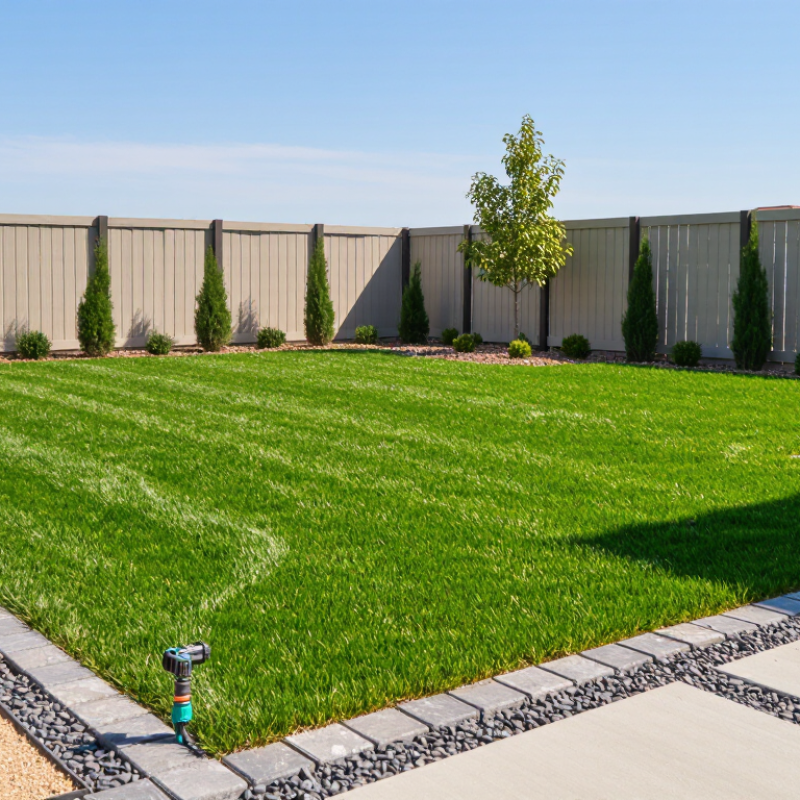
What Is Landscaping Artificial Grass and How Does It Work?
What Is Landscaping Artificial Grass?
Landscaping artificial grass is a synthetic surface designed to resemble natural lawn. It uses durable plastic fibers fixed into a flexible backing. The fibers stand upright, creating a green, even appearance around homes, patios, play areas, and pathways. Unlike natural turf, it does not need mowing, seeding, or regular watering. However, it is not completely maintenance-free.
A proper installation begins with ground preparation. Installers remove unstable soil, improve the base with compacted aggregate, and create a slight slope for drainage. A permeable backing allows rainwater to pass through the surface. Small drainage holes also help prevent puddles after storms. In warm weather, the material can feel hot under direct sunlight. Light-colored furniture and nearby shade can improve comfort. The surface may also flatten in busy areas. Brushing the fibers periodically can restore their shape, though results vary with traffic.
Tips: Check the soil before installation. Clay-heavy ground may need extra drainage work. Choose fiber height based on use, not appearance alone. Rinse dust and leaves with water, and remove spills promptly. Avoid dragging sharp furniture across the surface. One detail is easy to overlook: poor edging can allow weeds to appear along the borders. Artificial grass can simplify lawn care, but thoughtful preparation still determines its long-term performance.
Landscaping artificial grass is a synthetic lawn surface made from durable plastic fibers attached to a backing. It is installed over a prepared base, usually with a drainage layer beneath it. Unlike natural turf, it does not require routine mowing, fertilizing, or irrigation to remain green.
The chart compares typical summer irrigation guidance for natural turf with the routine irrigation requirement of artificial grass. Natural turf commonly needs about 25.4–38.1 mm of water per week, equal to 1–1.5 inches, while artificial grass requires 0 mm for routine watering. Occasional rinsing may still be used to remove dust or debris.
A landscaping artificial lawn is built in layers, not simply rolled across soil. The visible blades are usually made from polyethylene or polypropylene. Polyethylene feels softer, while polypropylene can provide a firmer, more defined surface. Blade shape also matters. Curved blades often recover better after foot traffic.
Beneath the blades, a flexible backing holds the fibers in place. Small drainage holes allow rainwater to pass through. A stable sub-base sits below this backing. It commonly contains compacted crushed stone, sometimes followed by a finer leveling layer. This foundation supports the lawn and reduces sinking, ripples, and standing water. The ground must be compacted carefully. A rushed base can ruin an otherwise expensive installation.
An edge restraint keeps the surface from spreading, especially near paths and planting beds. Infill, such as washed sand or other approved granules, may be brushed between the fibers. It adds weight and helps the blades stand upright. Some lawns need more infill than others. Shade, soil movement, and heavy use can change performance over time. Artificial grass is not maintenance-free. Leaves still collect, drainage holes can clog, and pets require regular cleaning. I have seen neat-looking lawns fail because installers ignored water flow. The most useful question is not how realistic the blades look, but where rain will go after installation.
| Layer or Component | Typical Material | Typical Specification | Primary Function | How It Works in a Lawn System |
|---|---|---|---|---|
| Grass Blades | Polyethylene, polypropylene, or a blend of synthetic polymers | Approximately 25–50 mm pile height | Creates the visible appearance and resilient surface of the lawn. | Flexible plastic blades bend under foot traffic and recover when supported by the backing, infill, and stabilizing yarns. |
| Primary Backing | Woven or non-woven polypropylene fabric | Perforated sheet with stitched yarn rows | Holds the grass yarns in their arranged pattern. | The yarn is tufted through the backing in rows, forming the structural base of the artificial turf surface. |
| Secondary Backing | Latex or polyurethane coating | Applied coating; thickness varies by product | Locks the tufted yarns into the backing and improves dimensional stability. | The coating helps prevent excessive yarn pull-out and keeps the backing from separating during normal installation and use. |
| Drainage Holes | Perforations formed in the turf backing | Commonly spaced at regular intervals | Allows rainwater and cleaning water to pass through the turf. | Water travels through the perforated backing into the compacted base and then drains into the soil or a designed drainage system. |
| Infill | Washed silica sand, coated sand, rubber granules, or approved alternatives | Quantity varies with pile height and use | Supports blades, adds weight, and helps improve surface stability. | Infill settles between the blades and reduces movement, matting, and excessive blade lay under regular foot traffic. |
| Optional Shock Pad | Recycled foam, polyurethane foam, or rubber-based underlay | Often about 10–25 mm thick | Improves cushioning and may reduce impact forces. | Installed beneath the turf in selected applications such as play areas, rooftops, and locations where additional comfort is required. |
| Turf Seams | Seam tape and outdoor-rated adhesive, or joining components | Installed beneath adjoining turf edges | Connects separate turf rolls into a continuous surface. | Properly prepared seams align the grass rows and help prevent visible gaps, lifting, or separation between sections. |
| Aggregate Base | Compacted crushed stone, road base, or graded aggregate | Often approximately 75–150 mm, site dependent | Provides a stable, level, and permeable foundation. | The compacted aggregate distributes loads, limits settlement, and creates a drainage path below the artificial turf. |
| Fine Bedding Layer | Fine crushed aggregate, screenings, or suitable leveling material | Often approximately 10–25 mm, site dependent | Refines the finished grade and smooths minor surface irregularities. | It is placed over the structural base and compacted or screeded before the turf is laid. |
| Perimeter Edging | Timber, treated composite, metal, concrete, or plastic edging | Selected according to site conditions | Restrains the turf edges and defines the lawn boundary. | Secure edging gives the installation a fixed perimeter and provides a surface for fastening the turf where required. |
| Ground Preparation | Excavated soil, compacted subgrade, and optional geotextile fabric | Depth depends on soil and drainage conditions | Removes unstable material and prepares the site for the base system. | Existing vegetation and soft soil are removed or treated, the subgrade is shaped, and a geotextile may be used to separate soil from aggregate. |
| Drainage System | Free-draining soil, perforated pipe, channel drain, or drainage mat | Designed according to rainfall and site conditions | Manages water beneath and around the artificial lawn. | Drainage prevents prolonged water retention by directing water away from the surface and toward suitable discharge points. |
Note: Layer thicknesses, infill quantities, backing construction, and drainage requirements vary according to soil type, climate, intended use, traffic level, and local installation practices.
Landscaping artificial grass is a synthetic surface designed to resemble natural turf. It uses plastic blades attached to a stable backing. Proper installation helps it drain well, stay flat, and withstand regular foot traffic. The ground rarely cooperates.
Installation begins with removing existing grass, roots, stones, and several inches of soil. Installers then check the area’s slope and drainage before adding a compacted aggregate base. Usually, the base is spread in layers and compacted with a plate compactor. A firm base matters more than the visible grass. Poor preparation can cause wrinkles, puddles, or sinking later.
A durable edging system keeps the turf in position. The artificial grass is rolled out, allowed to relax, and trimmed around paths, trees, and garden borders. Seams require careful alignment and outdoor joining tape. Small gaps become obvious. After securing the perimeter, installers brush the blades upright and apply suitable infill evenly across the surface. Infill supports the fibers, improves stability, and can reduce heat under direct sunlight. Drainage holes should remain clear, especially around patios or compacted soil. I have seen rushed projects fail because installers skipped this simple check. The process is cleaner than laying natural turf, but it is not effortless. Careful measuring, patient cutting, and repeated level checks usually produce the most natural result.
Artificial grass drains through perforated backing, a prepared base, and compacted aggregate. The surface only works well when these layers work together. EN 15330-1 specifies a water permeability benchmark of at least 180 millimetres per hour for many synthetic sports surfaces. Landscaping products may differ, so installers should verify the manufacturer’s test results. During heavy rain, I have seen poor sub-bases cause pooling, even when the turf itself drained correctly. The weak point is often below the grass.
Cleanliness depends on routine care. Leaves, soil, and pet waste can block fibres and reduce surface hygiene. A stiff, non-metallic brush lifts flattened blades, while gentle rinsing moves fine dust toward the drainage layer. Drainage must remain open. The Synthetic Turf Council’s maintenance guidance recommends regular debris removal and prompt waste cleaning, especially in high-use areas. Do not assume rain cleans everything. It does not.
Wear resistance comes from fibre shape, backing strength, infill stability, and traffic patterns. EN 15306 evaluates synthetic surfaces through repeated mechanical wear testing, helping assess fibre recovery and surface durability. High-use paths still need occasional brushing and redistribution of infill. ASTM testing methods can compare products, but laboratory results cannot perfectly predict every garden. Pets, furniture, sharp stones, and intense sunlight may accelerate wear. I would not promise zero maintenance. A realistic plan includes inspections after storms, seasonal brushing, and replacing damaged sections when necessary.
Landscaping artificial grass is used in gardens, balconies, rooftops, playground edges, and commercial entrances. It creates a green surface where natural turf struggles with shade, foot traffic, or poor soil. Synthetic blades are fixed into a flexible backing, while drainage holes allow rainwater to pass below. Some surfaces include sand or rubber infill, which helps support the blades and improve comfort.
Maintenance is simple, but it is not maintenance-free. Sweep leaves away with a soft brush, especially after windy weather. Rinse dusty areas with clean water. Pet zones need more attention; remove solid waste quickly and wash the area with a suitable, non-corrosive cleaner. Check the edges every few months. Loose seams or raised sections can become trip hazards and may worsen after heavy rain. In practice, neglected grass can develop flattened blades and unpleasant smells. That is a trade-off worth admitting.
Brush against the blade direction to restore its shape. Avoid metal rakes, strong solvents, and heavy furniture without protective pads. Inspect drainage after storms. If water remains for hours, clear nearby debris and have the base checked. Weeds may still appear around the edges, even on a carefully installed surface. A neat finish depends as much on the foundation as the grass itself.
The blades usually use polyethylene or polypropylene. Polyethylene feels softer, while polypropylene feels firmer and more defined.
A flexible backing holds the fibers. Drainage holes let rain pass into compacted crushed stone and leveling material.
A firm, level base reduces sinking, ripples, and puddles. Rushed compaction can damage an otherwise costly installation.
Workers remove grass, roots, stones, and several inches of soil. They then check slope, water flow, and soil stability.
Durable edging prevents movement near paths and planting beds. Joining tape connects aligned turf sections beneath the surface.
Infill adds weight and helps blades stand upright. It may also improve stability and reduce surface heat in direct sunlight.
Yes. Remove leaves, keep drainage holes clear, and clean pet areas regularly. It is lower-maintenance, not maintenance-free.
They should focus on drainage, measuring, cutting, and repeated level checks. Realistic blades mean little if rainwater has nowhere to go.
Yes. Poor preparation may create wrinkles, gaps, sinking, or standing water. I have seen rushed work fail for simple reasons.
Landscaping Artificial Grass is a manufactured lawn surface designed to provide the appearance and usability of natural grass with less watering and routine care. It typically combines synthetic grass fibers with a stable backing, a prepared base, and infill that supports the blades, improves resilience, and helps the surface feel more natural. Proper installation begins with clearing and leveling the area, improving the ground base, controlling weeds, placing drainage materials, and securing the grass so it remains smooth and stable.
A well-designed artificial lawn allows rainwater and cleaning water to pass through its backing and base, helping reduce puddling when the ground is prepared correctly. Regular brushing keeps the fibers upright, while removing leaves, dirt, and occasional stains helps maintain a clean appearance. Artificial grass is suitable for gardens, play areas, balconies, commercial landscapes, and other spaces where a consistent green surface is desired. With periodic inspection, simple cleaning, and prompt attention to damaged seams or uneven areas, it can remain attractive and functional for many years.

Deyuan Industry